Holla Holla: A Versatile Display Font for Modern Branding and Design
In the crowded landscape of digital typography, finding a display font that balances personality with professional utility can be a challenge. Holla Holla emerges as a compelling option for designers seeking a typeface that commands attention without sacrificing readability. As a creative and beautiful display font, it is engineered to bridge the gap between artistic expression and commercial application. This analysis explores the characteristics, practical applications, and strategic value of Holla Holla for professionals ranging from brand strategists to independent creators.
Defining the Aesthetic and Character
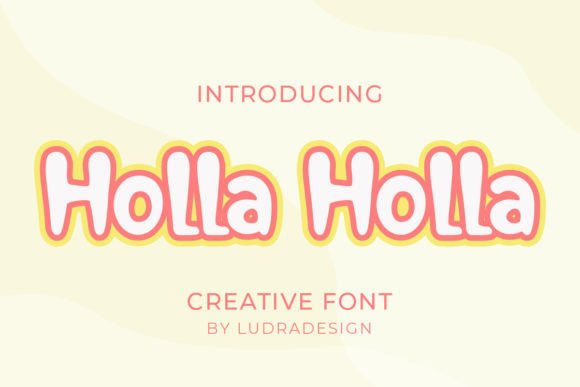
At its core, Holla Holla is defined by its bold presence and distinctive structural nuances. Unlike standard sans-serif or serif fonts designed primarily for long-form body text, this typeface is optimized for headlines, logos, and short bursts of communication. The letterforms exhibit a unique rhythm, combining geometric stability with organic flourishes that suggest movement and energy. This duality allows the font to feel both contemporary and timeless, making it suitable for projects that require a modern edge while maintaining a sense of approachability.
The "beautiful" descriptor often applied to Holla Holla stems from its careful attention to kerning and stroke weight. In lower sizes, it retains clarity, but it truly shines when scaled up. The curves are smooth yet deliberate, avoiding the overly decorative pitfalls that can render some display fonts illegible on smaller screens or printed materials. For a graphic designer, this means less time adjusting tracking manually and more time focusing on layout composition. The font's inherent balance ensures that it performs consistently across different media, whether viewed on a high-resolution retina display or printed on textured paper.
Practical Applications Across Industries
The true measure of a typeface's value lies in its versatility. Holla Holla demonstrates exceptional flexibility, matching an incredibly large set of projects. Its adaptability makes it a viable asset for diverse sectors, from retail to education.
- Branding Materials: For startups and established businesses alike, a logo needs to be memorable. Holla Holla provides a strong visual identity that works well for tech firms, lifestyle brands, and creative agencies.
- Product Packaging: On shelves crowded with competitors, packaging must pop. The font's bold lines ensure that product names stand out on boxes, bottles, and labels.
- Apparel and Homeware: The aesthetic translates seamlessly to physical goods. It is particularly effective on t-shirts, mugs, and shopping bags where typographic design often serves as the primary graphic element.
- Publishing and Print: Book covers and magazine headers benefit from the font's ability to convey tone instantly. Whether for a thriller novel or a lifestyle magazine, it sets the stage for the content within.
- Event Stationery: Invitation cards, greeting cards, and name cards require a touch of elegance mixed with clarity. Holla Holla offers a sophisticated look that elevates personal and corporate events.
Furthermore, the font excels in digital marketing assets. Posters, social media graphics, and web banners require typography that loads quickly and renders sharply. Holla Holla meets these technical requirements while delivering the visual impact necessary to stop a user from scrolling past.
Evaluating Usability and Workflow Integration
For professionals managing tight deadlines, usability is paramount. Holla Holla integrates smoothly into standard design workflows. It supports a comprehensive character set, including uppercase, lowercase, numerals, and essential punctuation, which reduces the need to switch fonts mid-project. This consistency is crucial for maintaining brand integrity across a multi-channel campaign.
From a technical standpoint, the font files are optimized for performance. They do not bloat website load times, a critical factor for SEO and user experience. When used in print, the vector outlines are clean, ensuring crisp edges regardless of the output resolution. Designers will appreciate the open apertures and distinct letter shapes, which minimize confusion between similar characters (such as the capital 'I' and lowercase 'l'), thereby enhancing readability in quick-glance scenarios.
However, like any display font, it has its limitations. It is not intended for paragraphs of dense text. Using Holla Holla for body copy in a report or a novel would strain the reader's eyes. Its strength lies in hierarchy; it should be used to guide the viewer's attention to key information, supported by a neutral sans-serif or serif font for detailed content. Understanding this distinction is vital for effective typographic hierarchy.
Strategic Value for Entrepreneurs and Marketers
For entrepreneurs and small business owners, every design decision impacts the bottom line. Investing in a versatile font like Holla Holla can reduce reliance on external agencies for minor updates. With a license that covers various uses, a business owner can create consistent marketing materials in-house. The font's ability to work on everything from a business card to a large-format banner means a cohesive brand image can be maintained without purchasing multiple typefaces.
Marketers will find value in the font's psychological impact. The style of Holla Holla conveys confidence and creativity. It suggests a brand that is innovative yet grounded. In competitive markets, this subtle psychological cue can influence consumer perception. When used in quotes or motivational posters, the font amplifies the message, adding a layer of visual authority to the words.
Long-Term Viability and Design Trends
Typography trends evolve rapidly, but the most successful display fonts possess a certain timelessness. Holla Holla avoids the extreme stylizations that often date a design within a year. Instead, it leans on fundamental principles of proportion and balance. This ensures that a logo or packaging design created today will remain relevant and effective five years from now. For publishers and educators, this longevity translates to cost savings, as there is no immediate need to rebrand or update materials due to stylistic obsolescence.
Moreover, the font's compatibility with various design styles—from minimalism to maximalism—adds to its enduring appeal. It can be paired with vibrant illustrations for a playful look or set against stark white space for a premium feel. This chameleon-like quality makes it a reliable tool in a designer's arsenal, ready to adapt to shifting client demands or market trends.
Making the Right Choice for Your Project
Deciding whether Holla Holla fits your specific needs requires an assessment of your project goals. If you are looking for a workhorse font for internal documents, this may not be the primary choice. However, if your objective is to create a strong visual identity, capture attention in a retail environment, or produce engaging social media content, Holla Holla is a top-tier contender.
Freelancers and bloggers will find it particularly useful for creating featured images and header graphics that distinguish their content from the noise. Educators can use it to make learning materials more engaging, while hobbyists working on personal projects like wedding invitations or custom merchandise will appreciate its ease of use and professional finish.
In conclusion, Holla Holla represents a synthesis of aesthetic charm and functional robustness. It is a tool that empowers creators to execute their visions with precision and style. By understanding its strengths in branding, packaging, and digital media, professionals can leverage this font to enhance communication and elevate the perceived value of their work. Whether for a global campaign or a local boutique, Holla Holla offers the reliability and flair necessary to make a lasting impression.